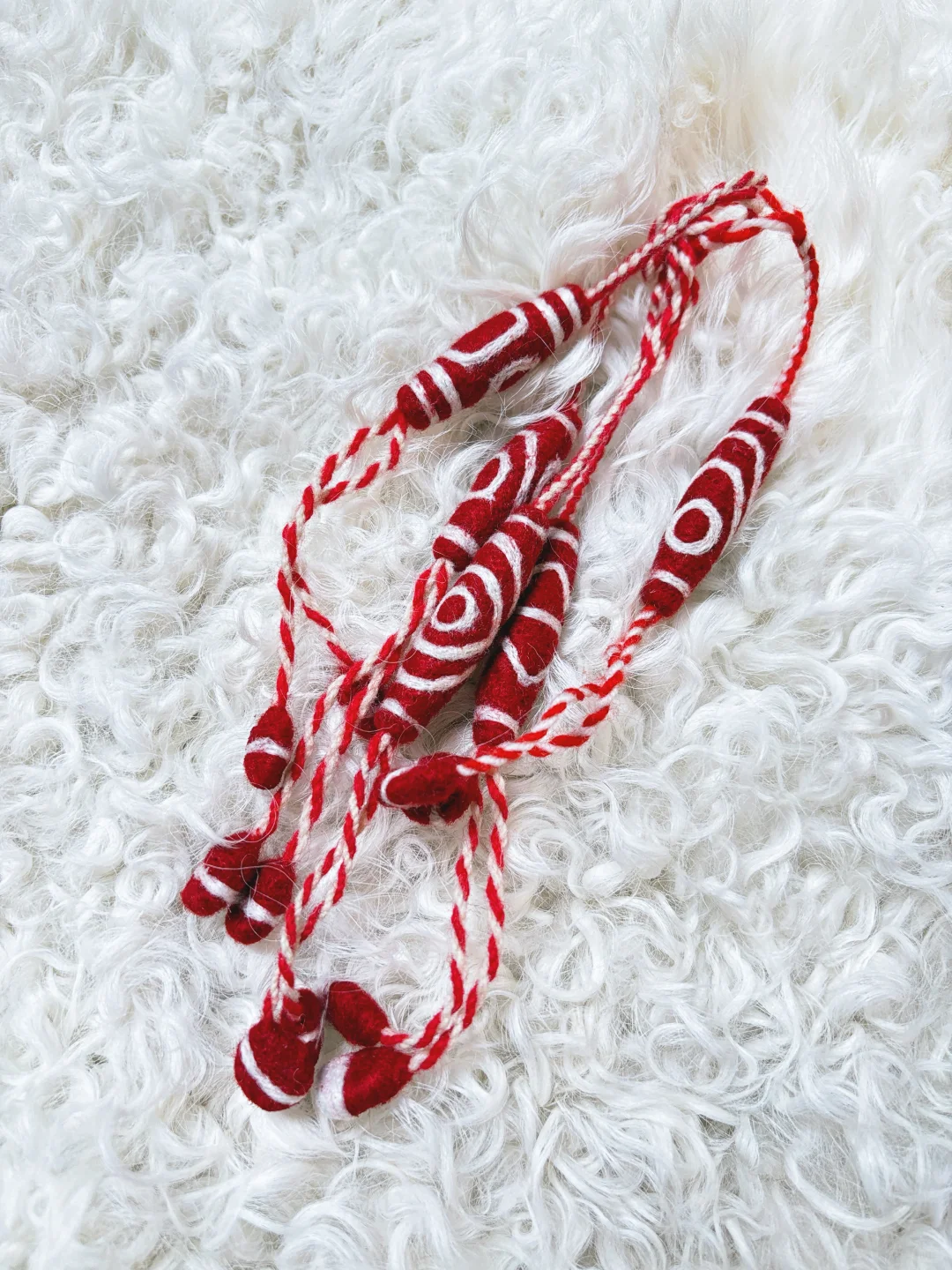
The herder's sling
The uddum (乌朵) is the Tibetan herder's sling — a long braid of hand-spun yak wool with a woven cradle, the wuti (乌梯), at its center. A stone sits in the cradle; the sling whirls overhead; the stone flies a hundred meters to turn the herd, or to startle a wolf from the flock.
Descended from the ancient shepherd's sling carried across Europe, Asia and the Andes, the Tibetan uddum is its most refined living form: not just a tool, but a woven object of pride, patterned by its maker and passed down through generations.
How it's made
Yak wool is teased and spun by hand into coarse yarn, then braided in traditional patterns — the women of Maozha Township count three classic braids. The sling closes with a loop for the finger at one end and a wool lash at the other. A full piece takes days of knotting.
Why it matters now
As pastoral life changes, fewer young hands learn the braid. Weaving for the world gives the craft a reason to continue — and gives you an object with a real maker, a real season, and a real story behind every knot.